
TL/DR
- PEX costs less, installs fastest, and fits most water supply lines and whole-home repipes, while copper lasts longest and works best for water heater connections
- PVC only handles drain and vent lines, and Austin’s chloramine-treated water can shorten copper’s lifespan through pinhole leaks
- Pipe choice changes your total plumbing installation cost Austin homeowners pay, and Team Flo-Right offers free consultations to match the right pipe to your job
PEX vs Copper vs PVC: Which Pipe Is Best for New Plumbing Installation?
PEX pipe works best for most new plumbing installation jobs in Austin homes today. It costs less than copper, handles temperature swings well, and bends around tight spots without extra fittings. Copper and PVC both still have their place, but PEX wins for most water supply lines in modern homes.
The wrong pipe choice can mean early leaks, higher labor costs, or a repipe job sooner than expected. This guide breaks down PEX, copper, and PVC so you can choose the right pipe for your Austin home.
Quick-Answer Table: PEX vs Copper vs PVC
| Pipe Type | Best Use | Cost Per Foot | Expected Lifespan |
| PEX | Supply lines, repiping | $0.40 – $2.00 | 40 – 50 years |
| Copper | Water heater lines, exposed runs | $2.00 – $8.00 | 50 – 70 years |
| PVC | Drain and vent lines | $0.50 – $2.50 | 25 – 40 years |
Full Comparison: PEX vs Copper vs PVC at a Glance
Each pipe material stacks up differently once you compare cost, durability, and hot water use side by side.
| Feature | PEX | Copper | PVC |
| Cost per foot | $0.40 – $2.00 | $2.00 – $8.00 | $0.50 – $2.50 |
| Lifespan | 40 – 50 years | 50 – 70 years | 25 – 40 years |
| Handles hot water | Yes | Yes | No |
| Freeze resistance | High | Moderate | Low |
| Installation method | Crimp or push-fit | Soldering | Solvent welding |
| Flexibility | Bends by hand | Rigid | Rigid |
| Best for | Supply lines, repiping | Water heater connections | Drain and vent lines |
What Is PEX Pipe?
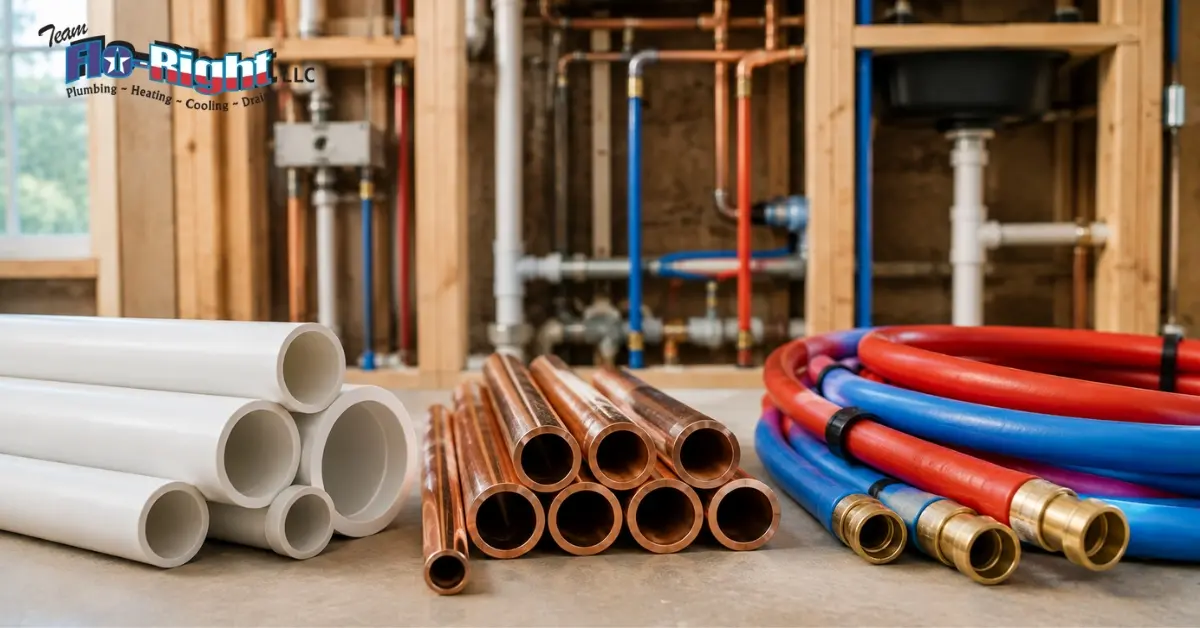
PEX pipe is a flexible plastic tubing made from cross-linked polyethylene. It bends around corners without extra joints. Plumbers use it for hot and cold water supply lines in homes across Austin. PEX resists scale buildup and handles freezing temperatures better than rigid pipe.
- Lightweight and easy to carry through tight attic or crawl space runs
- Easy to cut with basic tools, no torch or solvent needed
- Smooth interior surface that resists mineral buildup over time
What Is Copper Pipe?
Copper pipe is a rigid metal pipe known for strength and long-term reliability. Local Plumbers have used copper lines for decades in residential plumbing. It resists rust and holds up well under high heat. Copper costs more than PEX but often outlasts it.
- Resistant to rust and safe for hot and cold water lines
- Common choice for retrofit work in older homes with existing copper lines
- Handles extreme temperatures without breaking down
What Is PVC Pipe?
PVC pipe is a rigid plastic pipe used mainly for drain lines and vents. Short for polyvinyl chloride, it costs less than copper or PEX. PVC pipes work well for drains and vents but can’t handle hot water. Builders often pair PVC with CPVC for hot water drain connections.
- Lightweight and easy to work with during a retrofit
- Smooth interior surface keeps waste and water flowing without clogs
- Not used for hot water supply lines, only drain and vent lines
How Do PEX vs Copper vs PVC Pipes on Cost?
PEX costs the least, copper costs the most, and PVC sits in the middle. The price gap gets wider once you add labor.
Material Cost Per Foot
| Pipe Type | Cost Per Foot |
| PEX | $0.40 – $2.00 |
| Copper | $2.00 – $8.00 |
| PVC | $0.50 – $2.50 |
Labor and Installation Cost
Copper takes longer to install since it needs soldering. PEX uses push-fit or crimp fittings, which cuts labor costs. PVC uses solvent welding, which is fast but only works for drain lines.
Which Pipe Lasts the Longest?
Copper lasts the longest of the three, often reaching 50 to 70 years. PEX and PVC both hold up well but wear differently over time.
PEX Lifespan and Wear
PEX lasts 40 to 50 years under normal use. It resists corrode-related damage but can degrade under direct sunlight or UV exposure.
Copper Lifespan and Wear
Copper pipes can last 50 years or more. High chloramine levels in local water can shorten this lifespan in some homes.
PVC Lifespan and Wear
PVC lasts 25 to 40 years in drain and vent use. It becomes brittle with age, especially near heat sources.
Which Pipe Is Easiest to Install?
PEX is the easiest of the three pipes to install. It requires fewer tools and fewer joints than copper or PVC.
- PEX bends by hand and uses crimp or push-fit connections
- Copper needs a torch and solder, which raises fire risk during installation
- PVC uses solvent welding, which sets fast but leaves no room for mistakes
What Are the Pros and Cons of Each Pipe?
Each pipe material comes with tradeoffs, so the best fit depends on the job. Here’s a side-by-side look at the cons of each pipe alongside the benefits.
| Pipe Type | Pros | Cons |
| PEX | Low cost, flexible, freeze-resistant | Can degrade under UV light, not for outdoor exposure |
| Copper | Long lifespan, handles heat well | High material cost, harder to install |
| PVC | Cheap, easy to work with | Can’t carry hot water, becomes brittle over time |
Which Pipe Fits Which Job?
PEX fits most supply lines, copper fits water heater connections, and PVC fits drain lines.
| Job Type | Recommended Pipe |
| Main water supply line | PEX or copper |
| Water heater connection | Copper |
| Drain line | PVC |
| Whole-home repipe | PEX |
PEX vs copper plumbing Austin decisions often come down to budget and pipe access. Tight crawl spaces favor PEX. Exposed runs near a water heater still favor copper, since it holds up best as the choice for hot water connections.
How Does Austin’s Water Affect Pipe Choice?
Austin’s chloramine-treated water and mineral content wear down pipes differently depending on the material.
Austin’s Water Source and Mineral Content
Austin Water draws from the Colorado River and Lake Travis. Mineral content in this water source can affect pipe scale buildup over the years.
Chloramine Treatment and Copper Wear
Austin Water uses chloramine to treat drinking water. High chloramine levels can speed up pinhole leaks in copper lines.
Freeze Risk for Exposed Pipes
Central Texas rarely freezes, but the 2021 winter storm caused major pipe damage and water damage across the city. Homeowners with exposed lines now often choose PEX for its resistance to freezing during rare cold snaps.
What Does Austin’s Plumbing Code Require?
Austin requires plumbing materials to meet its own locally amended version of the state plumbing code. Austin operates as a home-rule city, so approved materials can shift by project type and inspection rules. A licensed plumber confirms which pipe material passes inspection before work starts. Skipping this step risks costly mistakes and failed inspections.
How Does Pipe Material Affect Your Installation Cost?
Your pipe choice directly changes your total installation price. Copper raises material and labor costs. PEX often lowers both. The material you pick shapes almost every part of your final bill, from the parts your plumber buys to the hours the job takes.
- Material cost sets the starting point, since copper runs far higher per foot than PEX
- Labor cost shifts too, since soldering copper takes longer than crimping PEX
- Permit and inspection fees stay about the same no matter which material you pick
- Repair costs down the road often run lower with PEX since fewer joints mean fewer leak points
If you want real numbers for your project, check our full guide on plumbing installation cost Austin homeowners can expect to pay.
Team Flo-Right walks every Austin homeowner through the best pipe material Austin TX homes actually need, based on the job, not the price tag.
FAQs About Best Pipe for Plumbing Installation Austin
Is PEX safe for drinking water?
Yes. PEX is approved for potable water use and meets national safety standards. Most Austin homes built or repiped in the last decade already use it.
Does copper really last longer than PEX in Austin?
Usually, yes. Copper wins on raw lifespan, but local chloramine levels wear it down faster than in most cities. A well-maintained copper line can still outlast PEX by 10 to 20 years.
Can you mix pipe materials in one home?
Yes. Many Austin homes use PEX for supply lines and PVC for drains within the same plumbing system. A licensed plumber makes sure the transitions between materials meet code.
Is PVC allowed for water supply lines?
No. Austin code limits PVC to drain lines and vents, not hot water supply. Using PVC for hot water can cause the pipe to warp or fail early.
What pipe do most Austin plumbers recommend today?
Most plumbers recommend PEX for new installs and repiping due to its cost and flexibility. It also holds up well against Austin’s chloramine-treated water compared to copper.
Get a Free Pipe Material Consultation in Austin
Not sure which pipe fits your home? Team Flo-Right offers free consultations on plumbing pipe types Texas homeowners can trust. The team looks at your home’s layout, your existing lines, and your budget before making a recommendation. You get a straight answer on the right material for your project, not a sales pitch for the priciest option. Fast scheduling, honest advice, no pressure.
